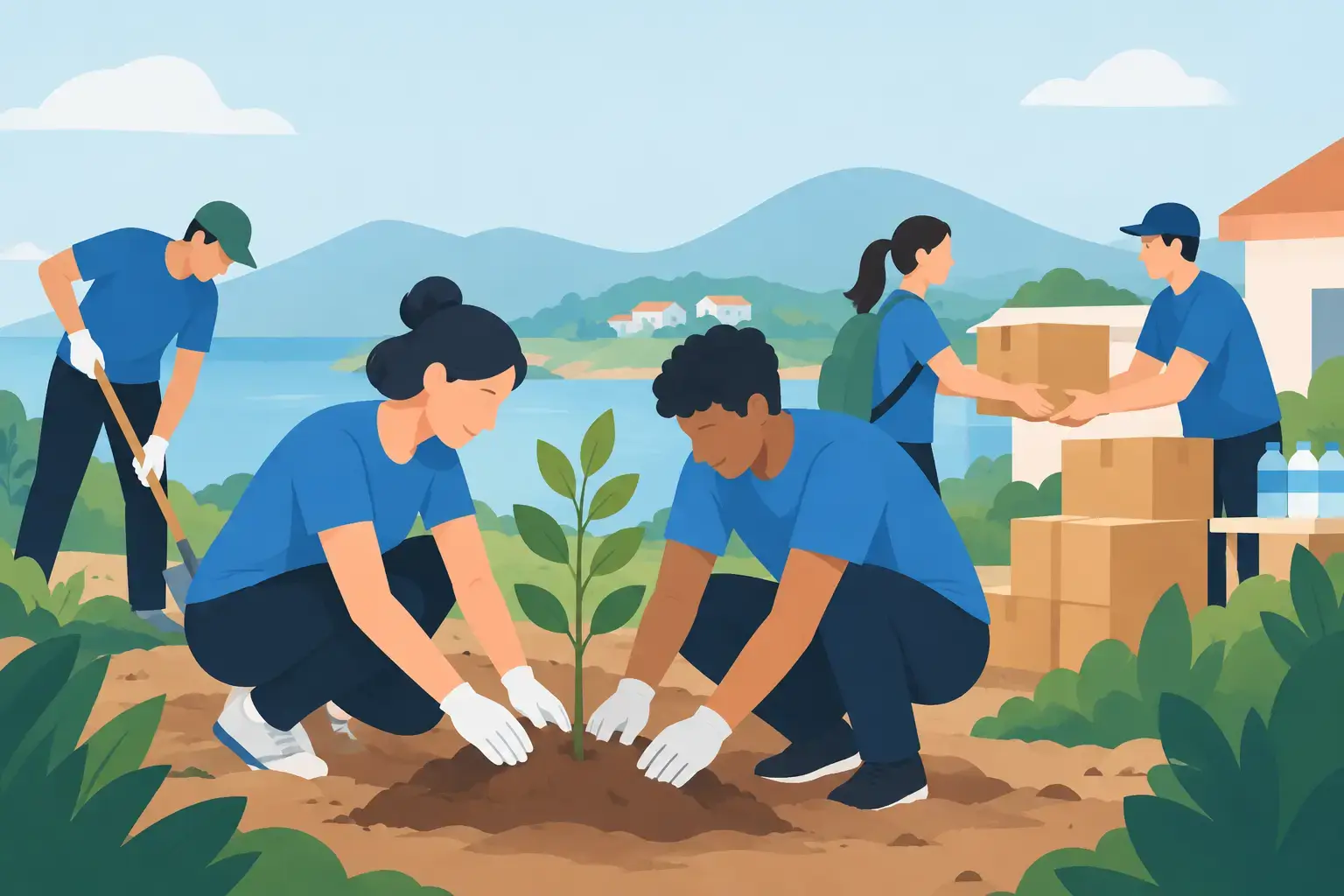
A service trip can become much more than a week of good intentions. The strongest group service trip examples bring people into real relationship with a community, give participants a practical role, and leave room to listen, learn, and grow. In Costa Rica, that also means using Spanish in meaningful moments: greeting a neighbor, asking how to help, sharing a meal, and seeing daily life beyond a visitor’s perspective.
For a church youth group, college class, family team, or service-minded organization, the goal is not to arrive with all the answers. It is to partner with local leaders, respect their priorities, and serve with humility. When service is paired with Spanish learning, cultural activities, and time for reflection, a group can return home with stronger relationships, greater confidence, and a more thoughtful view of global community.
What makes a group service trip meaningful?
A meaningful trip starts with a community-defined need. Rather than choosing a project because it looks impressive in photos, a responsible program works with trusted local partners who can identify work that is useful, safe, and appropriate for visitors. The project may be hands-on, but it should never replace local jobs or place participants in roles that require professional credentials.
Good preparation matters just as much as the project itself. Groups benefit from learning basic Spanish before arrival, discussing Costa Rican customs, and setting expectations for flexibility. Service plans can change because of weather, school schedules, or a partner’s changing needs. A group that can adapt graciously is often more helpful than one that arrives with a rigid agenda.
The following ideas can be shaped around the ages, skills, and goals of your team. Some fit a short Spanish Launch experience, while others are better for groups with more time to build language ability and relationships.
10 group service trip examples for Costa Rica
1. Support a community garden
A garden project can involve preparing beds, planting vegetables or herbs, building simple compost systems, and helping with seasonal maintenance. It is especially well suited for families and student groups because tasks can be adjusted for different ages and abilities.
The deeper value is conversation. Participants learn the Spanish words for tools, foods, weather, and growing practices while working beside local partners. Before planning, confirm who will care for the garden after the group leaves and whether the work fits the community’s existing plan.
2. Partner with a school on learning materials
Groups can prepare classroom games, organize donated supplies requested by teachers, create durable visual materials, or help refresh a learning space under school guidance. If group members have teaching experience, they may also assist with English conversation or cultural exchange activities when invited.
This option requires care. Visitors should not arrive expecting to lead a class or interact with children without clear school approval and appropriate safeguarding practices. Often, the most respectful contribution is supporting teachers’ existing goals rather than creating a separate program for one afternoon.
3. Join a river or neighborhood cleanup
A cleanup day is a tangible way to care for a shared place. Working with a local environmental organization or community association, groups might collect litter, sort recyclables where facilities allow, and learn about watershed health and waste management in the region.
The service becomes more lasting when the group also asks why trash collects there and what local solutions already exist. A short conversation about consumption, tourism, and public infrastructure can turn a simple cleanup into an honest cross-cultural learning experience.
4. Help improve a community gathering space
Depending on local needs and participant skill levels, a group may help paint a community center, clean and organize a shared space, maintain outdoor areas, or assist with basic improvements supervised by local professionals. These projects are often practical for teams that enjoy working together with their hands.
Construction-related work deserves extra caution. Electrical, structural, roofing, and other specialized tasks should be left to qualified local tradespeople. Your group can still make a valuable contribution through preparation, finishing work, funding locally purchased materials, and following the direction of the project leader.
5. Serve alongside a food security initiative
Food-focused service can include sorting donations, preparing ingredients, packing pantry items, or supporting a community meal program. It offers a natural setting for Spanish practice and hospitality, especially when participants work beside volunteers rather than only serving people from a distance.
Be thoughtful about dignity. Ask before taking photos, avoid treating meal service as a spectacle, and make sure any food donations match what the partner can store, prepare, and distribute. Purchasing ingredients locally can also support nearby farmers and businesses.
6. Assist with animal welfare and habitat care
Some teams are drawn to projects that support animal shelters, rescue organizations, or conservation efforts. Tasks may include cleaning enclosures, preparing food, maintaining trails, removing invasive plants, or helping with approved educational activities.
This is a good fit for groups that want to connect service with Costa Rica’s extraordinary biodiversity. Still, animal handling should always be directed by trained staff. Ethical programs prioritize animal well-being and conservation outcomes over close-contact experiences for visitors.
7. Create a cultural exchange day with local youth
A cultural exchange can include music, sports, art, board games, cooking, storytelling, and simple Spanish-English conversation. Rather than presenting one culture to another, design activities that invite everyone to teach, share, and participate.
For youth groups, this can be one of the most memorable group service trip examples because it replaces assumptions with friendship. It also works best when local educators or youth leaders help plan the day, determine group sizes, and guide appropriate interaction.
8. Support a senior community through companionship
With the direction of a local organization, groups may spend time visiting older adults, sharing music, helping with a social activity, or preparing cards and small items requested by the program. For Spanish learners, these conversations offer a gentle and meaningful way to practice listening.
Companionship is valuable, but it should never be rushed. A one-time visit can be encouraging, yet groups should avoid making promises they cannot keep. Writing follow-up notes through the partner organization or supporting a continuing local program may be more appropriate than personal contact outside established guidelines.
9. Contribute skills to a local nonprofit
Not every service project requires paintbrushes or shovels. College groups and professional teams may be able to offer useful skills such as photography, basic technology support, budgeting templates, translation review, social media planning, or event preparation.
Skill-based service is most effective when it begins with a clear request. A nonprofit may need help organizing files more than a new logo, or it may need Spanish-language materials rather than English outreach. Listen first, then offer what your group can genuinely sustain within the available time.
10. Combine service with a community celebration
A group can support a locally planned event by helping set up, prepare food, welcome guests, assist with children’s activities, or clean up afterward. This might be a school gathering, neighborhood event, or celebration connected to a community partner.
These moments reveal something service schedules can miss: belonging is built around ordinary hospitality. Sharing a meal, learning a dance step, or cheering at a game can help participants experience Costa Rica as a place of living relationships, not simply a destination.
Build the itinerary around relationships, not productivity
A full schedule may sound productive, but service trips need breathing room. Include Spanish classes that prepare your group for daily interactions, homestays or meals that invite conversation, and cultural experiences that provide context for the community you are entering. Adventure activities can belong in the itinerary too, particularly when they help a group appreciate the landscapes and traditions of Turrialba.
Set aside time each day to reflect. Ask participants what surprised them, where they felt uncomfortable, what they learned from a local partner, and how their assumptions changed. Reflection is where a project becomes personal growth rather than a checklist of tasks completed.
At Christian Immersion Spanish Academy, group experiences can be customized around Spanish level, ages, service interests, accommodations, and the time your team has available. Christian roots shape a commitment to love, respect, service, and hospitality, while students of every background are welcomed into the learning community.
Choose the right project for your group
The best fit depends on your group’s size, ages, physical abilities, language level, and willingness to learn. A middle school group may thrive in a garden or cultural exchange setting, while adult professionals may bring more value through a skill-based nonprofit partnership. A church group may want time for prayer and reflection, but should still let the local partner define the service need.
Start with one simple question: What would be genuinely helpful here? Then be ready to hear an answer that differs from the project you first imagined. That posture of listening is not a smaller form of service. It is often where real connection begins.



Leave a Reply