
A mission team may arrive in Costa Rica ready to paint a wall, serve meals, lead children’s activities, or encourage a local congregation. Yet for church mission trips in Costa Rica, Spanish often becomes the bridge that turns a planned project into a genuine relationship. Even a few heartfelt words can help a team member listen more carefully, receive hospitality graciously, and see the people they meet as neighbors rather than recipients of service.
A meaningful trip is not measured only by how much work gets finished in a week. It is also measured by the respect shown, the relationships formed, and the posture a group carries home. When Spanish learning, cultural understanding, and service are planned together, a mission trip can become a shared experience of growth for both visitors and the Costa Rican communities who welcome them.
Why Spanish matters on a mission trip
Spanish is more than a useful travel skill. It helps teams participate in daily life with greater humility. A volunteer who can greet a host family, ask a child about school, understand instructions, or thank a community leader in Spanish is communicating something important: “I want to meet you where you are.”
No team needs to arrive fluent for language learning to matter. Beginners can learn practical phrases before departure and build confidence through guided conversation once they arrive. Groups with more advanced speakers can go further, practicing how to share stories, discuss needs thoughtfully, and collaborate with local partners without relying entirely on translation.
This matters because interpretation, while valuable, can create distance when it is the only way people connect. Spanish helps close that distance. It also helps teams notice what is happening around them: the humor at a family table, the concerns behind a conversation, the preferences of a local partner, and the ordinary kindnesses that make cross-cultural friendships real.
Church mission trips in Costa Rica with Spanish immersion
Costa Rica offers a welcoming setting for teams that want service to be connected to learning. In a place such as Turrialba, students can move between Spanish instruction, homestay life, cultural activities, and community-centered service. The language introduced in class has an immediate purpose at the market, around the dinner table, on a walk through town, or while working alongside local friends.
This kind of immersion changes the rhythm of a mission trip. Rather than treating language study as a separate activity squeezed between service projects, teams begin to see it as preparation for better service. A morning lesson on greetings, questions, and polite requests can shape a more respectful afternoon of collaboration. A homestay conversation can reveal perspectives no itinerary could provide.
Christian Immersion Spanish Academy creates customizable group experiences around this connection between Spanish, culture, service, and relationship. Its Christian foundation informs a commitment to love, respect, and hospitality, while students and groups of every background are welcomed into the learning community.
The best format depends on a group’s goals. A youth group on its first international trip may need a slower pace, clear supervision, and beginner-friendly language practice. A college team, church staff group, or returning mission team may be ready for more conversation time and deeper discussions about culture, faith, and long-term partnership. There is no single right schedule. There is, however, a real difference between a trip built around activity and one built around attentive presence.
Begin with the community, not the project
Many churches plan trips by asking, “What can our team do?” A stronger first question is, “What has our local partner identified as helpful?” That shift protects against the temptation to arrive with assumptions and gives Costa Rican leaders authority over the work taking place in their own communities.
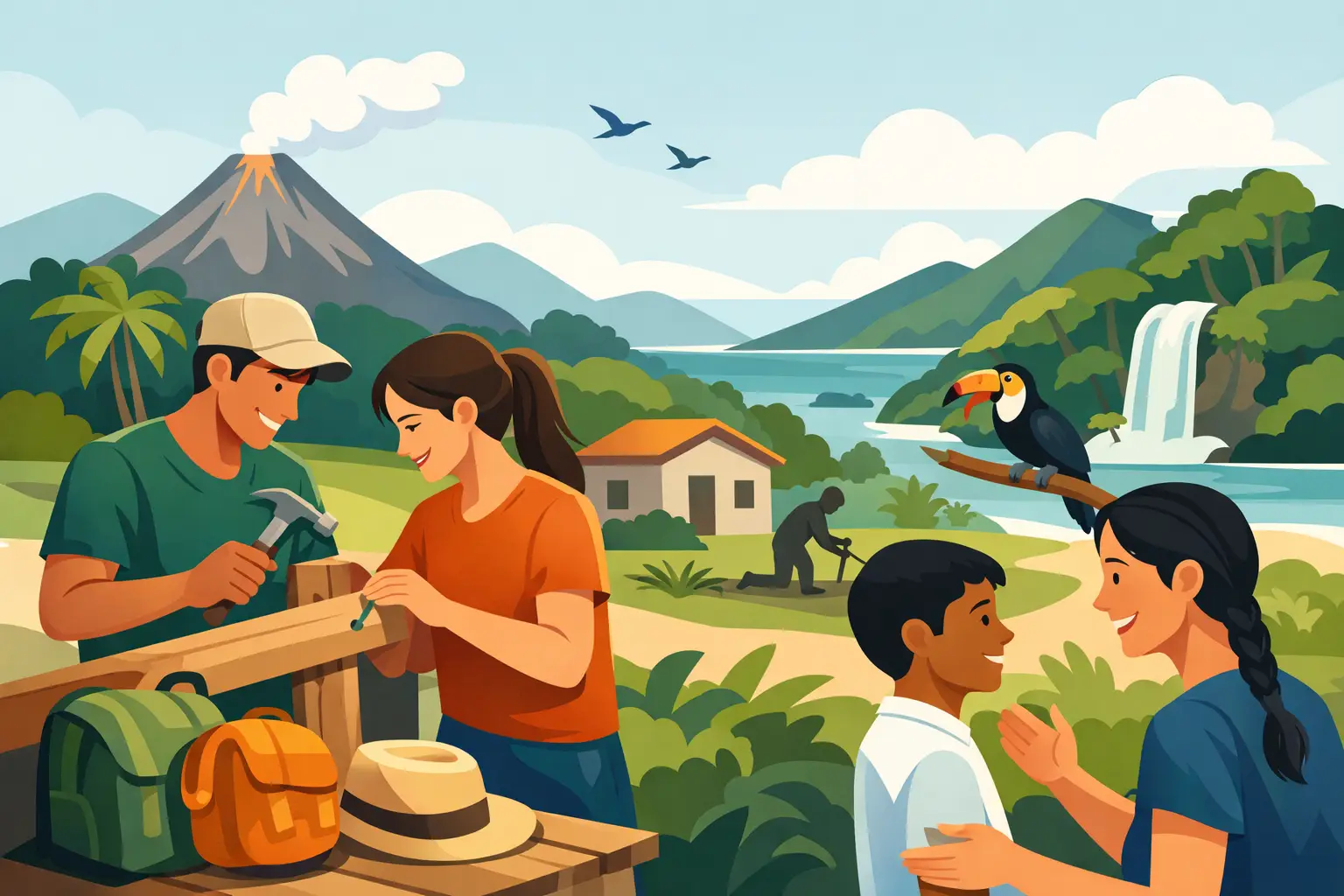
Service projects can be meaningful when they respond to an existing need, use appropriate resources, and support work that continues after the team departs. Sometimes that looks like assisting with children’s programs, community outreach, practical maintenance, or a local ministry event. Sometimes the most valuable contribution is less visible: listening, encouraging leaders, purchasing locally, and showing up consistently for a partnership that has grown over time.
Teams should be prepared for plans to change. Weather, transportation, community events, and local priorities can all reshape a schedule. Flexibility is not a failure of planning. It is one of the clearest signs that a group values people more than its own agenda.
Prepare your team for service and conversation
A well-prepared team usually has a calmer, more relational experience abroad. Before traveling, make room for practical Spanish practice as well as conversations about cultural humility. The goal is not to make people anxious about saying every word perfectly. The goal is to help them enter Costa Rica ready to learn.
Four areas deserve attention before departure:
- Basic Spanish for greetings, meals, directions, introductions, gratitude, and simple questions.
- Cultural expectations around hospitality, punctuality, personal space, meals, dress, and respectful communication.
- A service posture that avoids promises a team cannot keep and welcomes direction from local leaders.
- Group habits that support emotional health, including rest, reflection, patience, and honest communication.
It also helps to talk candidly about the limits of short-term service. A one-week team will not solve complex community challenges, and it should not claim to. What a short trip can offer is encouragement, skilled assistance when requested, financial support for local work, and the beginning or strengthening of a relationship built on mutual respect.
Let daily life become part of the learning
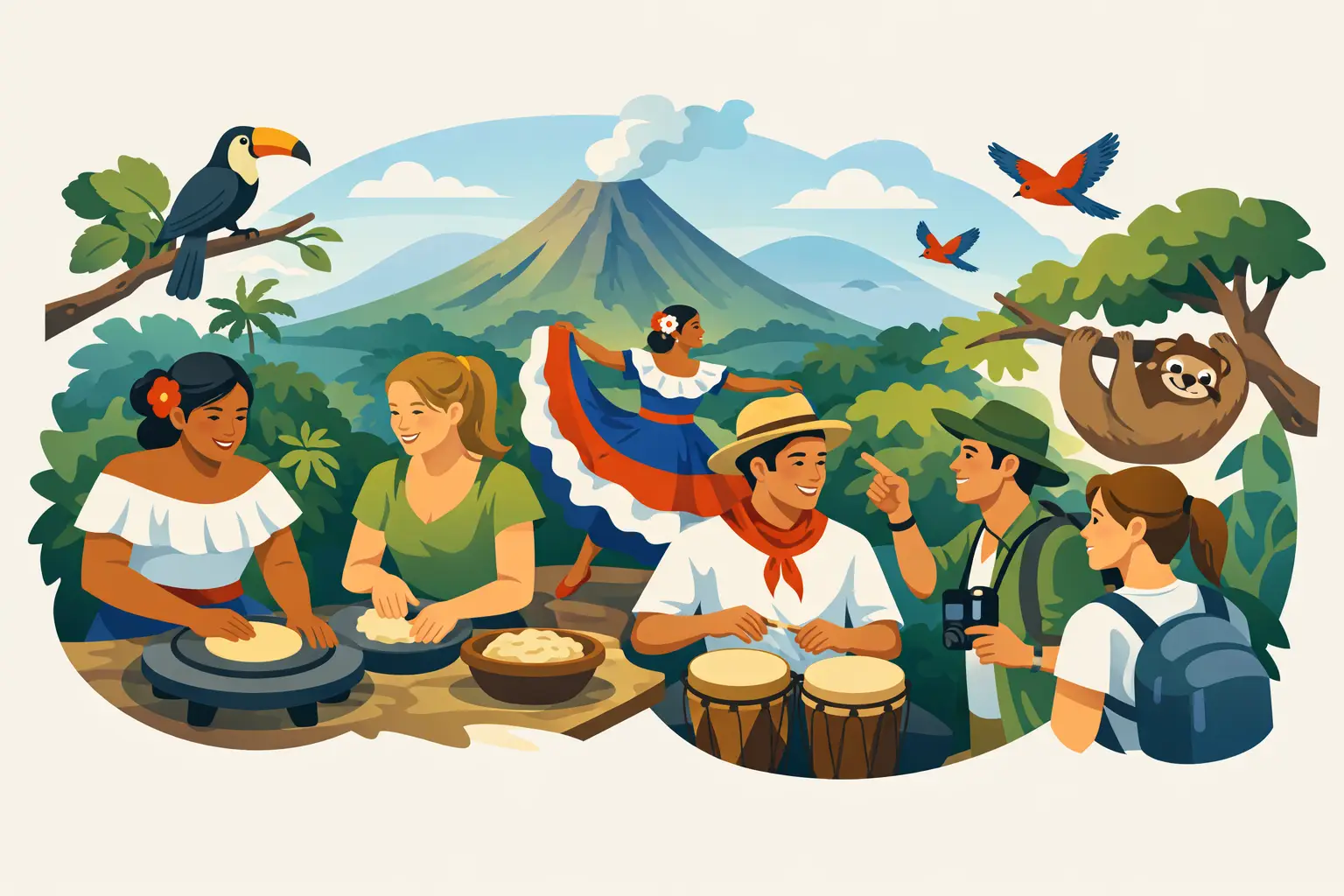
Some of the most lasting lessons of a Costa Rica mission trip happen outside a formal service site. A shared meal with a host family can teach more about generosity and everyday language than a workbook alone. A visit to a local market can become a low-pressure setting for practicing numbers and conversation. Time spent traveling through the region can open a conversation about Costa Rica’s history, agriculture, environment, and regional identity.
This is especially valuable for families and mixed-age church groups. Teens may gain confidence by ordering food or making a new friend in Spanish. Adults who have put off language learning for years often discover that they can communicate more than they expected. Children learn that another culture is not an abstract lesson but a community of people with names, stories, laughter, and gifts to share.
Build in time for reflection each day. A simple evening conversation can help participants process what they noticed, where they felt stretched, and what they learned from someone else. For faith-based groups, prayer can be a meaningful part of that reflection, especially when it centers gratitude, listening, and care for the people who have welcomed the team.
Choose growth over a packed itinerary
It is tempting to fill every hour with projects, sightseeing, and programs. Costa Rica has beautiful adventure opportunities, and shared exploration can strengthen a team. Still, an overloaded schedule can leave little room for the conversations that make immersion worthwhile.
A balanced trip includes purposeful service, structured Spanish learning, cultural experiences, rest, and unhurried relationship time. The exact balance will vary. A team coming primarily for intensive Spanish may dedicate more hours to class. A group serving alongside an established ministry may spend more time at a project site. In both cases, the strongest programs protect space for people to be present.
Traveling with a posture of learning does not make service less meaningful. It makes service more faithful to the dignity of the people a team hopes to serve. When participants return home with stronger Spanish, deeper cultural awareness, and relationships that matter, they are better prepared to keep caring, giving, praying, and learning long after the trip ends.


Leave a Reply