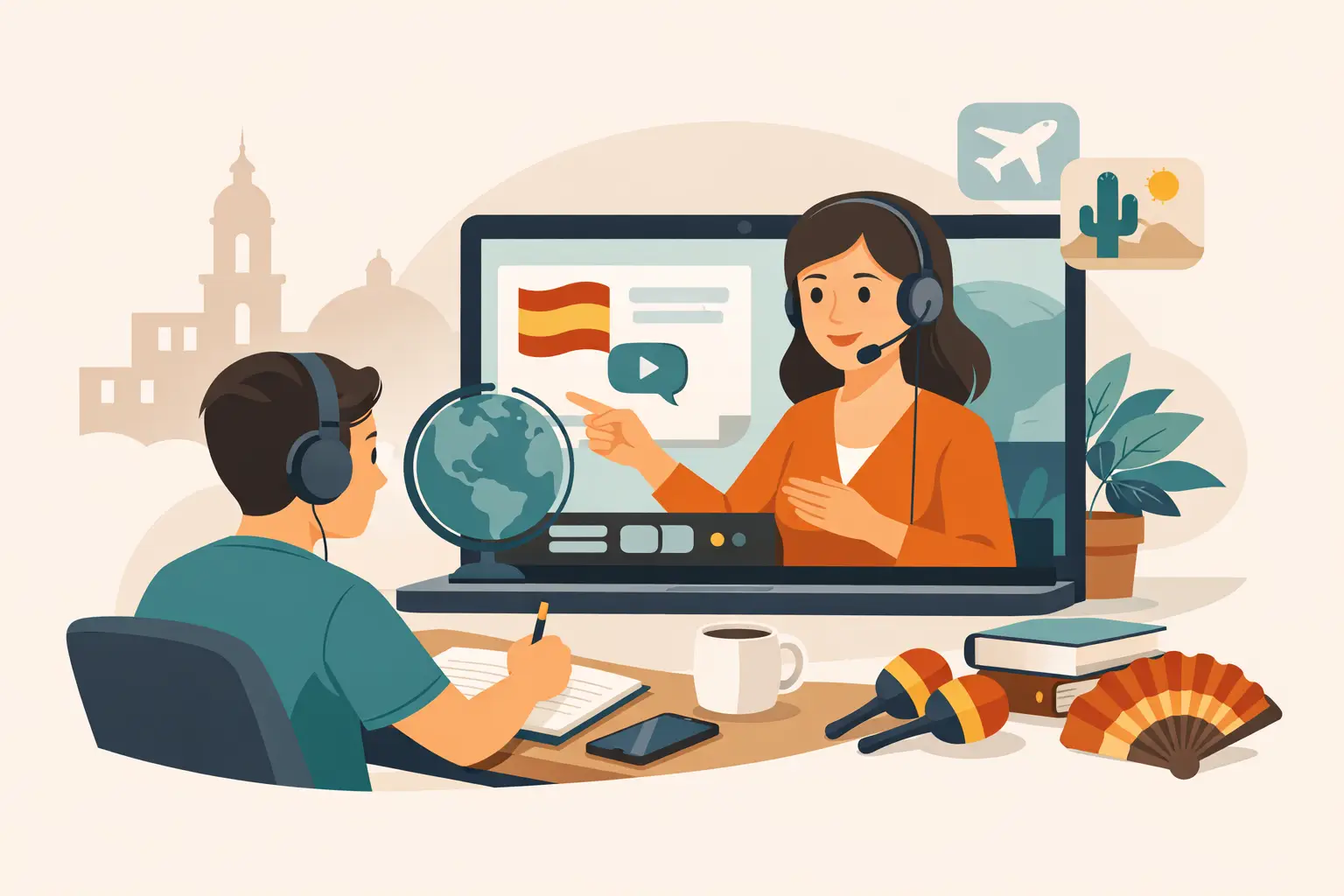
A language app can help you recognize words. A native-speaking teacher can help you use them when a neighbor asks about your weekend, a coworker changes the subject unexpectedly, or a host family invites you to the table. That is the difference many learners feel in online Spanish classes with native teachers: Spanish becomes less like a subject to complete and more like a relationship you can enter.
For families preparing for travel, professionals serving Spanish-speaking clients, retirees pursuing a long-held goal, and students planning an immersion experience, live instruction offers something deeply practical. You are not simply memorizing what Spanish looks like. You are learning how it sounds, moves, responds, and connects people.
Why a Native Teacher Changes the Learning Experience
Native teachers bring lived knowledge to every lesson. They can explain vocabulary, of course, but they also help learners hear the difference between a polite phrase and a phrase that sounds overly formal, between a textbook answer and the words people actually use with friends.
That cultural awareness matters because communication is never only grammar. A learner may know how to ask for directions, yet still feel unsure how warmly to greet someone, how to show respect to an older person, or how to respond when a conversation takes an unexpected turn. A teacher who has grown up speaking Spanish can offer context naturally, often through small corrections and real examples that make the language feel more human.
Pronunciation is another meaningful advantage. Spanish spelling is relatively consistent, but speaking comfortably still requires practice with rhythm, stress, vowel sounds, and connected speech. Listening to a native teacher regularly helps your ear adjust to Spanish as it is spoken in everyday life, not only as individual words read from a screen.
Still, “native speaker” should not be the only standard. The strongest teachers are both native speakers and skilled educators. They know how to slow down without sounding unnatural, explain a confusing pattern in a clear way, and encourage beginners who may be afraid of making mistakes. A native accent is valuable; thoughtful teaching is essential.
What Great Online Spanish Classes With Native Teachers Include
The best online learning experience is active. If a class consists mainly of slides, long explanations, and vocabulary lists, students may understand more than they can actually say. Progress comes when you have regular opportunities to listen, respond, ask questions, and try again.
A well-designed course balances structure with conversation. Beginners need a clear foundation in useful phrases, present-tense verbs, pronunciation, and basic sentence patterns. More experienced learners need room to tell stories, share opinions, discuss work or family life, and practice navigating unfamiliar topics. In both cases, the teacher should adapt examples to the student rather than force every learner through the same script.
Look for classes that give you personal feedback. It is encouraging to hear “good job,” but specific guidance is what helps you grow. A teacher might point out that your message was clear while showing you a more natural word order. They may notice that you understand questions but answer too briefly, then help you add detail and confidence.
Consistency matters more than marathon study sessions. Two or three live meetings each week, combined with short practice between lessons, can create real momentum. A busy professional may do best with focused 30-minute sessions. A gap-year student preparing for Costa Rica may want longer classes and more intensive speaking practice. The right pace depends on your season of life and your goals.
Conversation Should Start Earlier Than You Think
Many beginners believe they need to learn “enough Spanish” before they can hold a conversation. In reality, conversation is how learners begin building enough Spanish. Even a first lesson can include greetings, introductions, likes and dislikes, simple questions, and small moments of laughter when a new phrase finally lands.
A compassionate teacher creates a space where mistakes are expected. This is especially important for adults, who often carry more fear of embarrassment than children do. When learners feel respected, they are more willing to take the small risks that lead to fluency: trying a new verb tense, asking for clarification, or telling a story without first translating every word in their head.
Choose Classes Around the Life You Want to Live
Before enrolling, consider what you hope Spanish will make possible. The answer should shape the class you choose.
A parent planning a family trip may need travel language and age-appropriate sessions for children and teens. A nurse, teacher, or business professional may need vocabulary related to work, along with practice responding clearly under pressure. Couples may want shared lessons that turn learning into a meaningful part of their week. A retiree may be preparing to spend more time in Latin America and may value patient conversation practice over test preparation.
Groups have their own needs. School groups, church groups, and service teams benefit from language instruction that prepares them to enter a community with humility. Learning how to introduce yourself, listen carefully, express gratitude, and ask respectful questions can shape an entire cross-cultural experience.
This is where personalized instruction matters. A course built around real goals is more motivating than one built only around chapters. It gives learners a reason to return to the next class, even after a demanding day.
Bring Spanish Into the Rest of Your Week
Online instruction can be deeply personal, but it works best when Spanish has a place beyond the lesson itself. You do not need hours of extra study every day. Small, repeatable habits make the classroom language stick.
After a lesson, write three sentences about your day using the new vocabulary. Say common household phrases out loud while cooking or getting ready in the morning. Listen to a short Spanish video and notice one expression your teacher has used. If you are learning with your family, choose a few simple phrases to use together at dinner.
The goal is not perfection. It is familiarity. Each brief encounter tells your brain that Spanish belongs in your real life, not only in a scheduled appointment.
It also helps to bring questions back to class. Perhaps you heard a phrase in a song that did not match what a textbook taught you. Perhaps you are unsure why one country uses a word differently from another. These questions lead to the kind of learning that builds cultural understanding alongside language skill.
Online Learning Can Be the Beginning of Immersion
For many students, virtual lessons are not a substitute for travel. They are a meaningful first step toward it. Learning with a native teacher before an international program can help a traveler arrive ready to participate rather than retreat into English. You may still make mistakes, but you will have practiced recovering from them.
Then, when you share meals with a host family, shop at a local market, join an activity, or serve alongside community members, the phrases from class have somewhere to go. They become part of a lived experience.
At Christian Immersion Spanish Academy, online learning can support that journey by giving students a welcoming place to begin, continue, or prepare for a more immersive season in Costa Rica. The aim is not to sound perfect. It is to communicate with growing confidence, curiosity, and respect.
The next conversation may begin with only a greeting and a few careful words. Let that be enough. With a caring teacher, steady practice, and a willingness to connect, those first words can become a doorway to friendship, service, and a wider world.






Leave a Reply