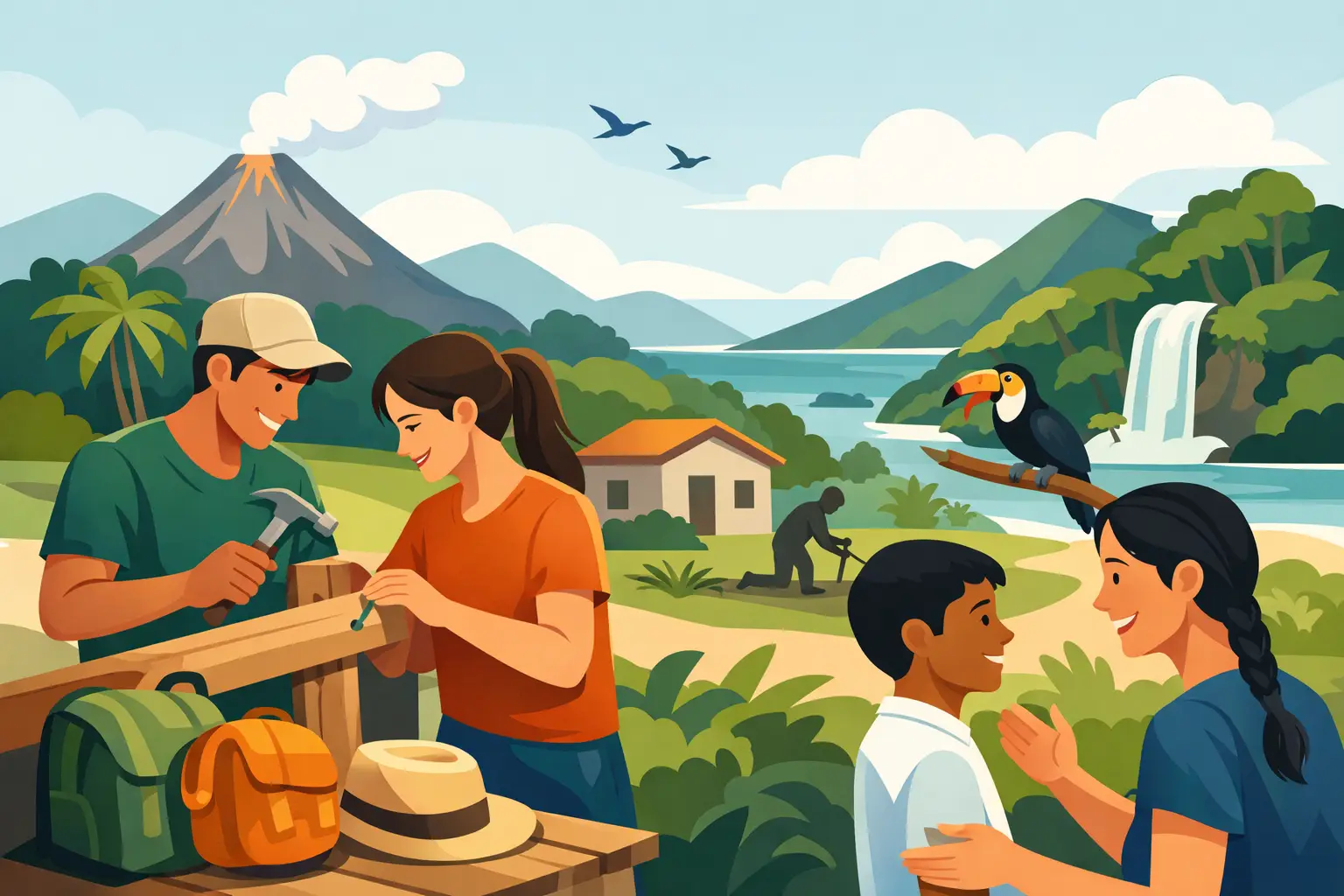
A service trip can leave a group with great photos and good intentions. Or it can change the way people listen, speak, serve, and see their neighbors. The difference often comes down to preparation, partnership, and time spent learning from the community. Spanish service trips Costa Rica offer a meaningful setting for that deeper kind of experience, especially when Spanish learning is part of each day rather than an activity squeezed in between projects.
Costa Rica is known for its extraordinary natural beauty, but its greatest invitation may be relational. A conversation with a host family, a shared meal after a morning of service, or the courage to ask a new question in Spanish can turn travel into genuine connection. For students, families, church groups, and service-minded teams, language study helps replace the feeling of being a visitor with the humility and confidence to participate.
Why Spanish Service Trips in Costa Rica Work
Many groups want to serve internationally because they care deeply about people and want to put their values into action. That desire matters. Yet meaningful service is not measured by how full a schedule looks or how much a team can accomplish in a few days. It begins with respect for local leadership, a willingness to learn, and an understanding that communities are not projects to be completed.
Adding Spanish immersion changes the posture of a trip. Participants do not arrive expecting everyone else to bridge the communication gap. They practice greetings, questions, introductions, and everyday conversation. They learn the words needed to understand instructions, express gratitude, and build small but sincere relationships. Even beginning speakers can communicate care when they make the effort.
Costa Rica is an especially welcoming place to begin. Its culture places high value on warmth, hospitality, family, and community. In a town such as Turrialba, groups can experience a side of the country that feels personal and grounded, with opportunities to learn in the classroom, live alongside local families, serve with community partners, and enjoy the surrounding mountains, farms, and rivers.
The goal is not to become fluent in a week. A short trip can, however, help students move from memorized phrases to real communication. That shift is often the beginning of a longer journey toward Spanish confidence and cross-cultural understanding.
Language Learning Makes Service More Personal
Service and Spanish instruction should support one another, not compete for attention. When groups have a clear learning plan, students can use new vocabulary immediately in daily life. A morning lesson might focus on food, family, directions, or community vocabulary. That afternoon, those same words have a purpose at a service site, in a local shop, or around a homestay table.
This kind of learning is memorable because it is connected to real people. Students may make mistakes, pause mid-sentence, or rely on gestures at first. That is normal. A supportive environment gives them room to try again. Over time, they often discover that communicating well is not about perfect grammar. It is about presence, curiosity, patience, and respect.
For teens and school groups, this can be a powerful confidence-builder. Students who are hesitant in a traditional classroom may find motivation when Spanish helps them thank a community partner or play with local children. Adult learners often appreciate the same practical progress, especially when they have spent years wishing they could speak more comfortably while traveling or serving.
What meaningful service can look like
The right project depends on the needs and direction of local partners. A thoughtful program may include support for community initiatives, work alongside schools or nonprofits, practical assistance with locally identified projects, or relationship-centered activities that encourage cultural exchange. The important point is that the community sets the priorities.
Groups should be cautious of experiences that promise dramatic results without explaining who leads the work after visitors leave. Short-term teams are most helpful when they contribute to an ongoing local effort, follow the guidance of trusted partners, and recognize the skills already present in the community.
Service may also look quieter than participants expect. Listening to a local leader, returning to the same place year after year, purchasing from local businesses, or sharing a respectful conversation can all be part of responsible engagement. These moments do not always make the most dramatic stories, but they often create the most lasting understanding.
Planning a Trip With Purpose
A strong trip begins well before the flight. Groups need a clear purpose that goes beyond “helping.” Is the central goal Spanish growth, team formation, faith in action, cultural learning, support for a particular partner, or a blend of these? There is no single right answer, but clarity helps leaders choose the right pace, service activities, lodging, and preparation.
For a first-time group, a balanced schedule usually works best. Too much classroom time can make participants feel they have missed Costa Rica. Too many activities can leave little room to reflect, rest, or process what they are learning. A rhythm of Spanish classes, community service, homestay life, cultural activities, and a little adventure gives students time to absorb the experience.
Homestays can be especially meaningful for groups ready to embrace everyday immersion. A host family provides more than a place to sleep. It offers a window into meals, routines, humor, family stories, and the ordinary conversations where language becomes real. Students may be surprised by how quickly a warm greeting at breakfast becomes a fuller conversation by the end of the week.
Families traveling together may need different support than a college or church group. Younger children benefit from age-appropriate instruction, dependable care options, and shared activities that feel welcoming rather than overwhelming. Professionals and retirees may prefer a program with more personalized language goals and a gentler pace. The best Spanish service trip is not the busiest one. It is the one designed around the people who are actually coming.
Questions worth asking before you choose
Before committing to a program, group leaders should ask how service partnerships are selected, who determines project priorities, and how the organization prepares participants to engage respectfully. It is also wise to ask how Spanish instruction is grouped by level, what support is available for beginners, and whether the itinerary includes time for rest and reflection.
Safety and logistics deserve clear answers as well. Reliable transportation, lodging details, dietary support, emergency planning, background-checked staff when working with minors, and realistic activity expectations all help groups travel with greater peace of mind. Purposeful travel does not require uncertainty. Good organization allows participants to focus their energy on learning and relationships.
CISA builds customized group experiences around these needs, bringing together Spanish instruction, homestays, cultural learning, service, and Costa Rican adventure in a community-centered setting. Its Christian foundation informs a commitment to love, respect, hospitality, and service while welcoming participants from every background.
Preparing Hearts, Not Just Packing Lists
A packing list matters, especially in a country with tropical rain, changing elevations, and active outdoor days. But the most valuable preparation happens in the conversations leaders have with their teams before departure.
Participants should understand that they are guests. They should expect different routines, different assumptions about time, unfamiliar foods, and moments when they do not know exactly what to say. Rather than treating these moments as inconveniences, groups can approach them as invitations to learn.
A few Spanish basics before travel can reduce anxiety and show care. Greetings, polite requests, numbers, food vocabulary, and phrases for asking someone to repeat themselves provide a practical starting point. More importantly, teams should practice humility. “Can you help me understand?” may be one of the most valuable sentences a traveler learns, in any language.
Reflection also deserves a place on the itinerary. Brief conversations at the end of the day help students connect what they saw with what they felt and learned. Leaders can ask what surprised them, whose perspective they heard, where communication was difficult, and how they want to carry that lesson home. These questions keep the trip from becoming a blur of activity.
Let the Experience Continue at Home
The return home is not the end of a service trip. It is where participants decide whether their experience will shape their next choices. Some continue learning Spanish through conversation practice or online classes. Some become more attentive to Spanish-speaking neighbors, coworkers, classmates, and local businesses. Others rethink what service means and look for ways to support long-term community work closer to home.
That is the quiet promise of a well-planned experience in Costa Rica: participants return with more than memories. They return with names, stories, new language, and a wider understanding of what it means to show up with care. When service is rooted in partnership and Spanish is practiced with courage, a trip can become the beginning of relationships that keep teaching long after the suitcase is unpacked.


Leave a Reply