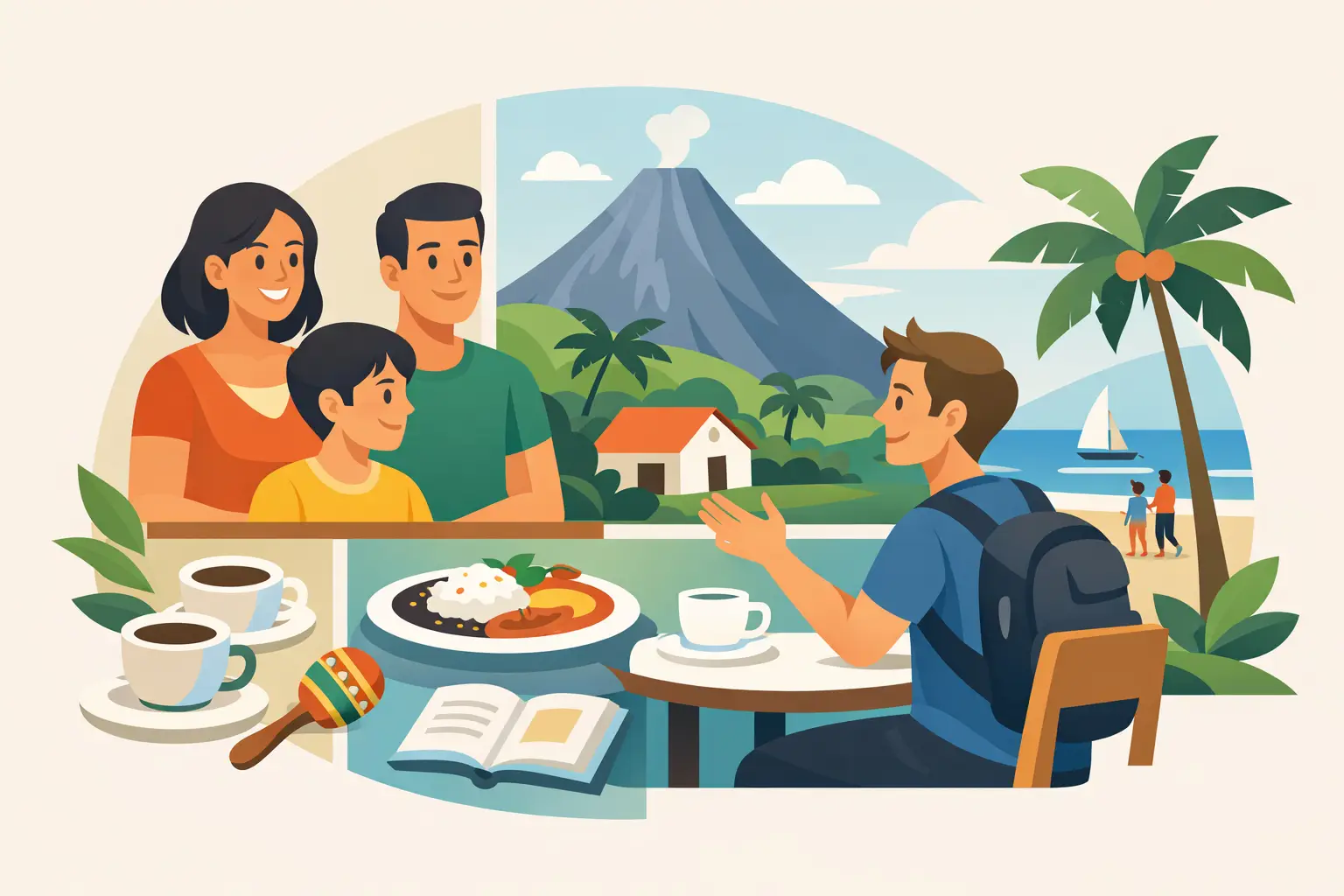
The first real breakthrough in Spanish often happens away from a classroom. It may come while helping set the table, asking where to put your laundry, or laughing when your host family corrects one small word with kindness. Costa Rica Spanish homestay programs create those moments every day, turning study into a shared life experience rather than something that ends when class does.
For learners who want more than a hotel stay and a few phrases for travel, a homestay offers a welcoming place to practice, listen, and belong. In a community-centered town such as Turrialba, it can also become an introduction to Costa Rican hospitality, family rhythms, food, and the relationships that give language its meaning.
Why a Homestay Changes How You Learn Spanish
A Spanish class gives you structure: new vocabulary, grammar patterns, guided conversation, and feedback from a teacher. A homestay gives those lessons somewhere to live. You hear how people actually greet one another in the morning, tell stories over dinner, make plans for the weekend, or talk through everyday problems.
That repeated, low-pressure contact matters. When a host parent asks about your day, you do not need a perfect answer. You need an answer you can give today. Over time, the phrases that once felt like memorization become part of how you communicate naturally.
This is especially valuable for beginning learners, who may feel nervous speaking in public. Your host family becomes a familiar audience. They know why you are there, expect you to be learning, and can often slow down, repeat a phrase, or show you what they mean. For advancing speakers, the benefit shifts toward nuance: regional expressions, natural pacing, humor, and the confidence to keep a conversation moving.
A homestay also teaches what a textbook cannot fully capture. You may notice how meals bring people together, how neighbors greet one another, or how family members show care through practical acts of hospitality. Those observations build cultural understanding alongside language skill.
What Costa Rica Spanish Homestay Programs Usually Include
Programs vary, but most pair a private room in a local home with meals and a placement process designed to match students with an appropriate household. Some homes host one student at a time; others welcome several international learners. A school may also offer private bathrooms, shared bathrooms, laundry arrangements, dietary accommodations, transportation guidance, or a nearby alternative accommodation for students who want more independence.
The daily schedule is often simple. Students attend Spanish lessons during part of the day, then return to their host home for meals, conversation, and rest. Afternoons and weekends might include local outings, cultural activities, volunteering, church or community gatherings, coffee with new friends, or adventure experiences such as hiking and rafting.
The right balance depends on your goals. A professional taking one intensive week may prioritize calm space, reliable Wi-Fi, and early meals. A gap-year traveler may want a lively household with children and plenty of conversation. Families traveling together may need rooms that keep them close, child-friendly meals, dependable care for younger children, and activities they can enjoy together.
Before committing, ask clear questions about the household. Is there a private room? What meals are included? Are there children, pets, other students, or early morning routines? How far is the home from class? Can the host accommodate allergies, mobility needs, or a vegetarian diet? Knowing the details beforehand helps everyone begin with realistic expectations.
The Trade-Off: Immersion Is Not a Resort Experience
The best homestays feel warm, but they are still real homes with real routines. You may need to adjust to different meal times, shorter showers, shared living spaces, or a family schedule that does not look like your own. Costa Rica is known for warmth and generosity, yet it is not meant to be a copy of home.
That adjustment is part of the learning. Respectfully asking questions, adapting your habits, and expressing gratitude are all language practice. If you are used to handling everything independently, it can feel vulnerable to ask for directions or explain that you did not understand. Those are often the conversations that help learners grow fastest.
Still, a homestay is not the ideal choice for every traveler. Someone managing a demanding remote-work schedule, a highly specific medical need, or a strong need for complete privacy may prefer a hotel or private apartment while participating in classes and activities. Choosing the accommodation that supports your wellbeing is wise, not less committed.
How to Make Your Homestay Feel Like a Shared Home
A successful stay is less about speaking flawless Spanish and more about showing up with curiosity and consideration. Bring a few conversation starters, but do not treat your host family like a language exercise. Ask about their interests, listen to their stories, and share something about your own life too.
Small habits make a meaningful difference. Let your hosts know your plans, arrive on time for meals when possible, keep common areas tidy, and ask before inviting friends over. If something is confusing, bring it up early and kindly. A respectful conversation about food, noise, transportation, or laundry is far better than quietly becoming frustrated.
It also helps to keep a small notebook or note on your phone. Write down expressions you hear at breakfast or words you wish you had known during dinner. Then bring them to class the next day. Your teacher can explain the grammar, pronunciation, and cultural context behind language that felt too quick in the moment.
For parents, preparation can make the experience more peaceful for children. Explain that they will be guests in someone else’s home, practice a few polite phrases before traveling, and leave room in the schedule for rest. Young learners often gain confidence quickly when they see Spanish connected to games, meals, and caring adults rather than only worksheets.
Choosing a Program With Support Beyond Placement
A homestay should never feel like a student has been dropped into an unfamiliar home without support. Look for a program that gets to know both students and host families, communicates expectations clearly, and remains available if questions arise. Thoughtful matching is not about finding a perfect household. It is about creating a safe, respectful starting point where people can connect.
The strongest programs also connect lodging to a larger learning journey. At Christian Immersion Spanish Academy, students can combine personalized instruction, local cultural experiences, and homestay life in a setting shaped by hospitality, respect, and service. The school’s Christian foundation informs its care for people while welcoming learners from every background.
For school groups, church groups, and mission teams, that support becomes even more important. Leaders need reliable coordination, age-appropriate housing, clear communication, and room for the group to reflect on what it is learning. A well-organized homestay experience can help students move beyond the role of visitor and see themselves as respectful guests and neighbors.
Let Conversation Lead the Way
You do not need to arrive in Costa Rica already confident to benefit from a homestay. You only need the willingness to try a greeting again, ask one more question, and accept that a few mistakes are part of being welcomed into another culture.
The meal you almost skipped, the family story you only partly understood, and the new phrase you practice on the walk home may become the moments you remember most. Give yourself permission to be present for them. That is where Spanish begins to feel less like a subject and more like a bridge to people.


Leave a Reply