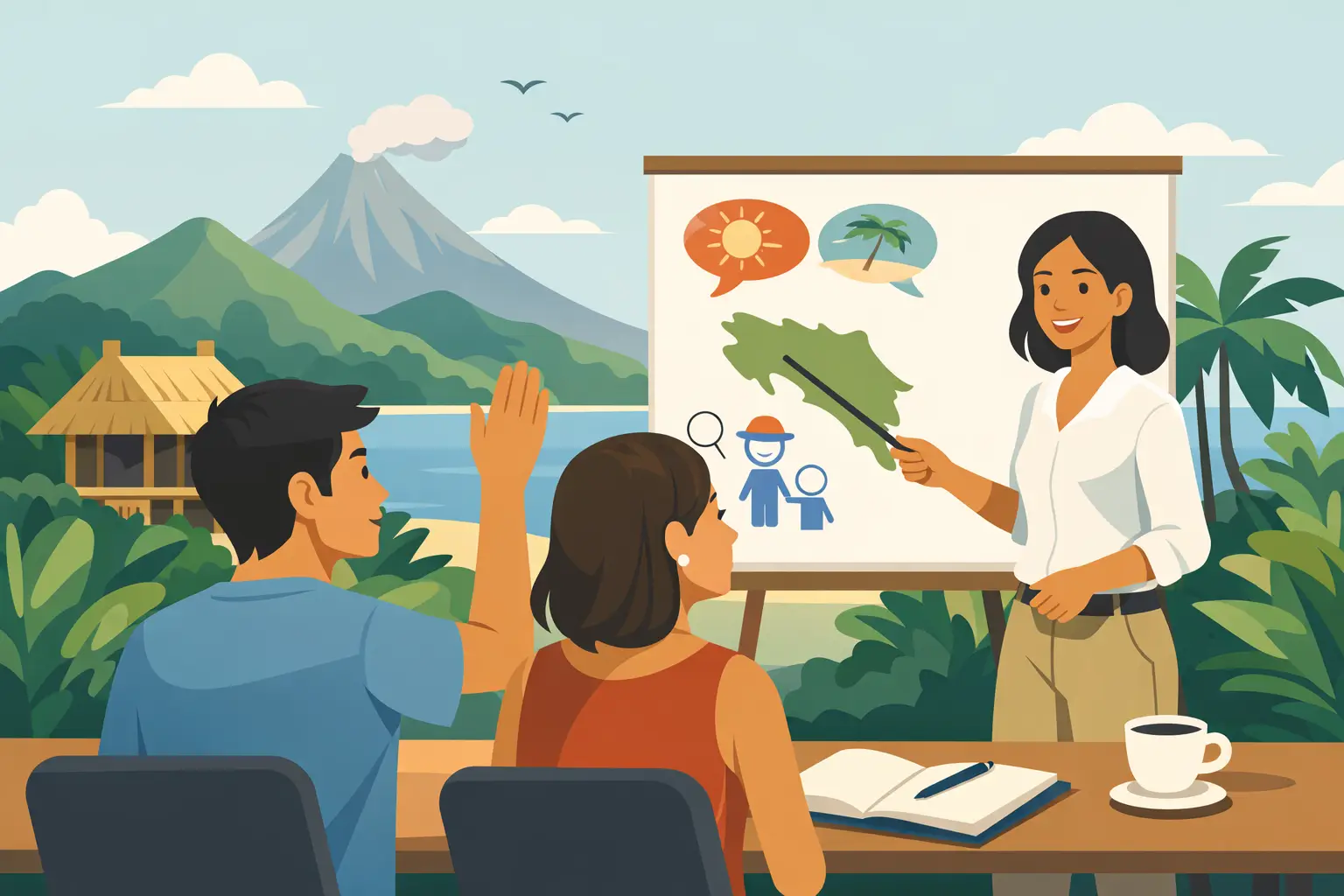
A menu, a morning greeting, a conversation around the dinner table – these are the moments when Spanish stops feeling like a subject and starts becoming part of your life. Spanish classes in Costa Rica for adults offer more than a change of scenery from an app or evening course. They create the repeated, real-world practice that helps words stay with you, while inviting you into relationships, traditions, and a new rhythm of daily life.
For adults, that combination matters. You may be preparing for travel, communicating with family, serving in a community, pursuing a career goal, or finally making time for a long-held dream. Whatever brings you to Spanish, an immersion experience can meet you where you are and give you a meaningful reason to keep speaking.
Why Spanish Classes in Costa Rica for Adults Feel Different
A classroom can give you structure: useful vocabulary, clear grammar explanations, listening practice, and a patient teacher who can correct misunderstandings before they become habits. Immersion gives that structure a purpose. You leave class and use the language to order coffee, ask a question at a local shop, talk with your host family, or share stories with new friends.
That repetition is not glamorous every day. At first, it may mean pausing mid-sentence, confusing a verb tense, or realizing you know the word only after the conversation has moved on. Yet those small stretches are often where confidence grows. Adults do not need to speak perfectly before participating. They need a setting where it is safe to try, receive encouragement, and try again.
Costa Rica is especially inviting for this kind of learning. Its culture places a high value on warmth, hospitality, and connection. In a community such as Turrialba, daily life can feel more personal than it does in a large tourist center. You are not simply passing through between attractions. You have the chance to recognize people, return to familiar places, and become a respectful guest in the community.
What to Look for in an Adult Spanish Program
The right program is not necessarily the one with the longest schedule or the most activities. It is the one that supports your goals, current level, learning style, and comfort with new experiences. Before choosing, consider how much individual attention you need. A true beginner may benefit from a slower pace and plenty of guided speaking. An intermediate learner may need thoughtful correction, richer conversation, and help moving beyond familiar phrases.
Ask how instruction connects to life outside the classroom. A strong adult program gives you room to practice what you are learning the same day. If the lesson focuses on directions, food, or past events, you should have natural opportunities to use those language tools during meals, outings, and conversations. This connection helps grammar become practical rather than something you can recognize only on a worksheet.
Accommodations deserve equal attention. A homestay can be one of the most valuable parts of your experience because it surrounds you with everyday Spanish in a caring setting. Breakfast conversations, shared meals, and questions about the day provide low-pressure practice that adds up quickly. It also offers a closer view of Costa Rican family life, from cooking and celebrations to the simple kindness of being welcomed into a home.
A homestay is not the best fit for every traveler, and that is okay. Some adults need more privacy, are traveling with a spouse, or prefer independent accommodations. The important thing is to be honest about what will help you feel rested and ready to engage. Learning grows faster when you are challenged in the language but supported in your living environment.
Choose a Pace You Can Sustain
A one-week program can be an excellent Spanish Launch. It gives beginners a foundation, refreshes skills for returning learners, and lets you experience what it feels like to use Spanish throughout the day. For a traveler with limited vacation time, a focused week can turn hesitant phrases into useful communication.
A longer stay makes room for a Spanish Venture. Over several weeks, you can begin noticing patterns, responding with less translation in your head, and having conversations that move beyond introductions. This is often when learners encounter an honest plateau: they can handle basic needs but want to say more than they can yet express. Consistent classes and daily interaction help carry them through it.
For adults seeking Fearless Conversation or Boundless Fluency, more time brings a different kind of growth. You can discuss opinions, understand humor, navigate unexpected situations, and form relationships that are not limited to learner-level exchanges. Fluency is not a switch that flips at a certain number of weeks. It develops through sustained attention, curiosity, and a willingness to keep showing up when speaking still feels imperfect.
Build Your Learning Around Real Connection
The most memorable adult immersion programs leave room for both learning and living. Cultural activities can introduce you to local food, music, history, and natural beauty. Adventure outings may take you beyond the classroom and give you fresh stories to tell in Spanish. Service experiences can add another layer by connecting language study with respectful participation in the community.
These experiences should never treat culture as a backdrop for a vacation. The deeper value comes from listening, asking thoughtful questions, and recognizing that you are learning from people, not just practicing on them. A teacher, host parent, guide, neighbor, or shop owner may help you understand expressions no textbook can fully explain. In return, approach each conversation with humility and appreciation.
At Christian Immersion Spanish Academy, this spirit is shaped by Christian-founded values of love, respect, service, and hospitality, while welcoming students from every background. The goal is not simply to complete a course. It is to create a community where learners can grow in communication, confidence, and cross-cultural understanding.
Make Room for Rest and Reflection
Adults often arrive with full lives waiting at home: demanding jobs, family responsibilities, caregiving, retirement plans, or a long list of unanswered emails. It can be tempting to pack every hour with lessons and excursions. A full schedule can be energizing, but exhaustion makes it harder to listen, remember, and speak freely.
Leave space to review your notes at a café, take a walk, journal about a conversation, or simply sit with your host family after dinner. Those quieter moments help your brain organize what it is learning. They also make the experience feel less like a race and more like a genuine season of growth.
How to Arrive Ready to Learn
You do not need to arrive with a large vocabulary to benefit from immersion. Bring a few practical habits instead. Practice introducing yourself, learn polite greetings and questions, and get comfortable saying, “Could you repeat that?” or “I do not understand yet.” These phrases give you a way to stay in the conversation even when you feel stuck.
Set a personal goal that is specific but kind. Rather than promising yourself that you will become fluent in two weeks, aim to order meals confidently, speak Spanish at dinner each night, or have one five-minute conversation without switching to English. Small goals create visible progress and give you a reason to celebrate the effort.
It also helps to release the idea that adults are too late to learn. Children may absorb pronunciation differently, but adults bring strengths of their own: discipline, life experience, empathy, clear motivation, and the ability to connect ideas to real needs. When you bring those strengths to an encouraging immersion community, language learning becomes less about proving yourself and more about participating fully.
The next time you reach for a familiar English phrase, pause and offer the Spanish you have. A patient listener, a shared laugh, and one brave sentence can open a door that no textbook page ever could.


Leave a Reply