
A language breakthrough rarely arrives as one dramatic moment. More often, it appears quietly: ordering breakfast without translating first, understanding a host family’s joke, or realizing you have been talking for ten minutes and never reached for English. This Spanish progress case study follows that kind of growth – the honest, sometimes uneven, deeply encouraging progress that can happen when Spanish becomes part of daily life.
The learner in this story is a composite based on the goals and experiences common among adult students in Costa Rica. We’ll call her Maya. She came from the United States with a basic foundation from an app and a few community college classes. She could introduce herself, ask for directions, and recognize familiar words. But she froze when a real conversation moved faster than expected.
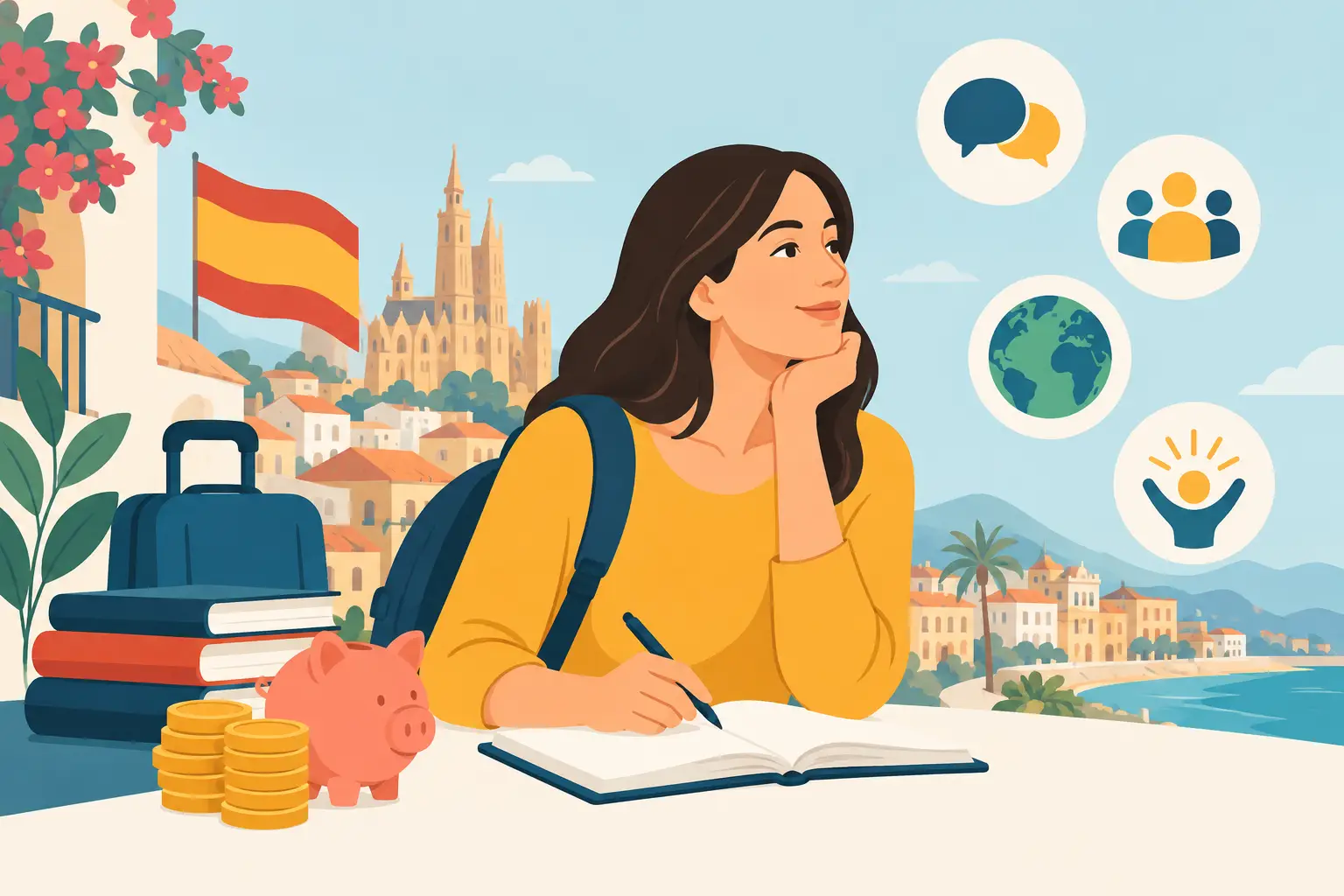
Maya’s goal was not to sound perfect. She wanted to speak warmly with Spanish-speaking coworkers, travel with more confidence, and stop feeling like every conversation was a test.
The Starting Point: Knowledge Without Confidence
Before arriving, Maya knew more Spanish than she gave herself credit for. Her challenge was access. In a worksheet, she could choose the right verb tense. In conversation, she would mentally build a sentence in English, translate it word by word, worry about making a mistake, and then say very little.
This is a common point of frustration for adult learners. Vocabulary matters, and grammar matters, but neither automatically creates conversational ease. A learner also needs repeated chances to listen, respond, clarify, laugh, try again, and discover that communication can continue even when every word is not correct.
For Maya, a full-immersion setting changed the purpose of Spanish. It was no longer only a subject to study. It became the language of morning greetings, shared meals, market visits, directions, stories, and everyday kindness.
Spanish Progress Case Study: Four Weeks of Lived Practice
Maya enrolled in a four-week personalized program in Turrialba. Her days included structured Spanish classes, a homestay, cultural activities, and unplanned conversations that became just as valuable as scheduled lessons.
Four weeks is enough time for meaningful movement, but it is not a shortcut to effortless fluency. Outcomes depend on a student’s starting level, willingness to participate, learning needs, and how much Spanish they continue using after returning home. Still, a month of intentional immersion can create a powerful shift: Spanish starts to feel usable.
Week One: Learning to Stay in the Conversation
The first few days felt demanding. Maya understood more than she could say, especially when teachers spoke clearly and gave her context. At her homestay, however, the pace was natural. Family members asked about her day, offered food, and discussed local plans without pausing for a textbook exercise.
At first, Maya answered with short phrases. She used gestures, repeated words she recognized, and occasionally asked someone to slow down. Her teachers helped her practice practical phrases that gave her more control: “Could you repeat that?” “How do you say…?” and “I understand, but I don’t know how to respond yet.”
Those phrases mattered. They turned confusion from a stopping point into an invitation to keep going.
By the end of the week, Maya was no longer trying to understand every word. She was listening for the main idea. That is a small but vital change. Real conversation asks us to tolerate some uncertainty, just as we do in English when a child changes the subject or a friend tells a story with unfamiliar details.
Week Two: Connecting Class to Daily Life
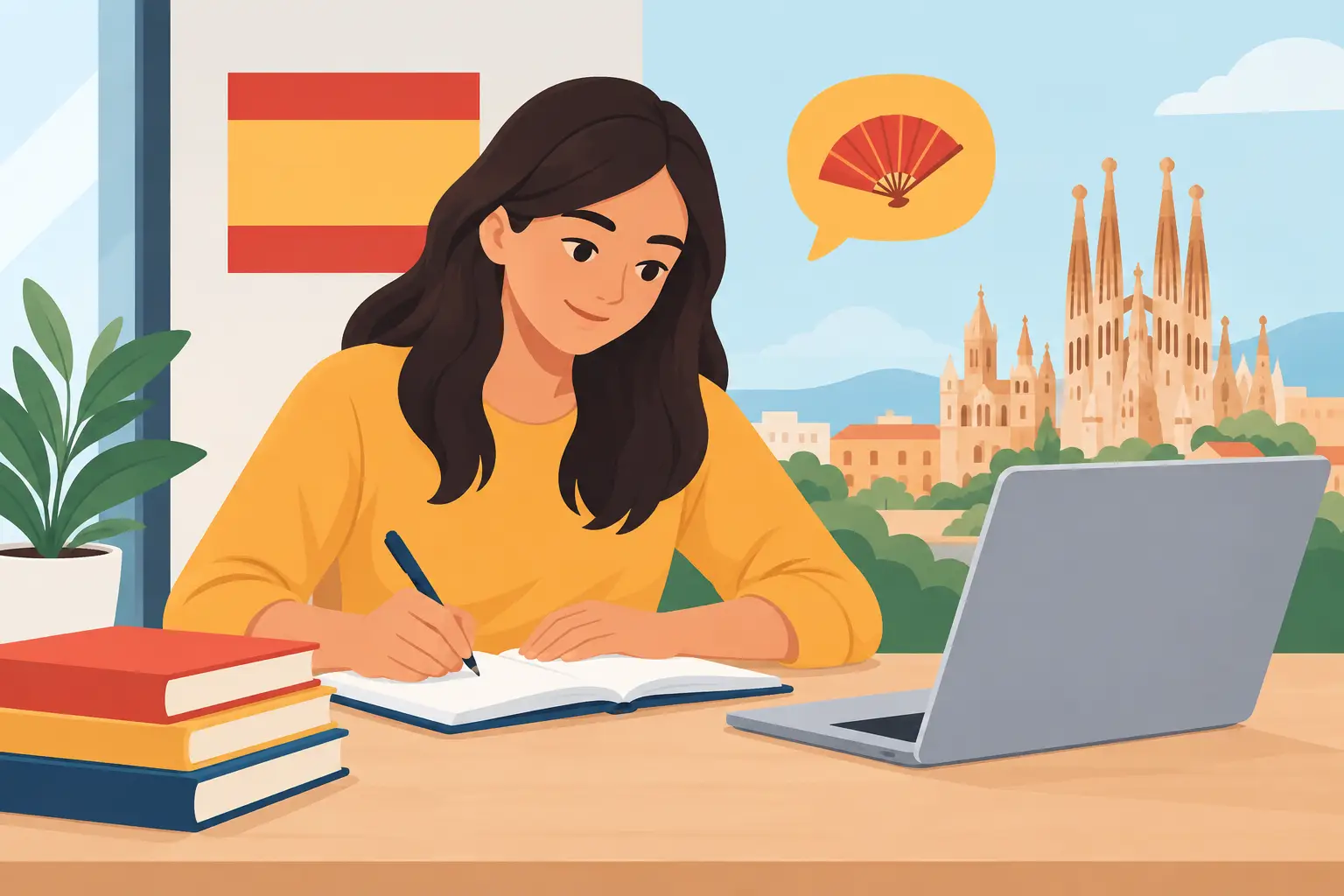
In the second week, Maya’s classes focused on language she could use immediately. She practiced past events so she could describe her weekend, question forms so she could learn about others, and everyday vocabulary connected to food, transportation, family, and work.
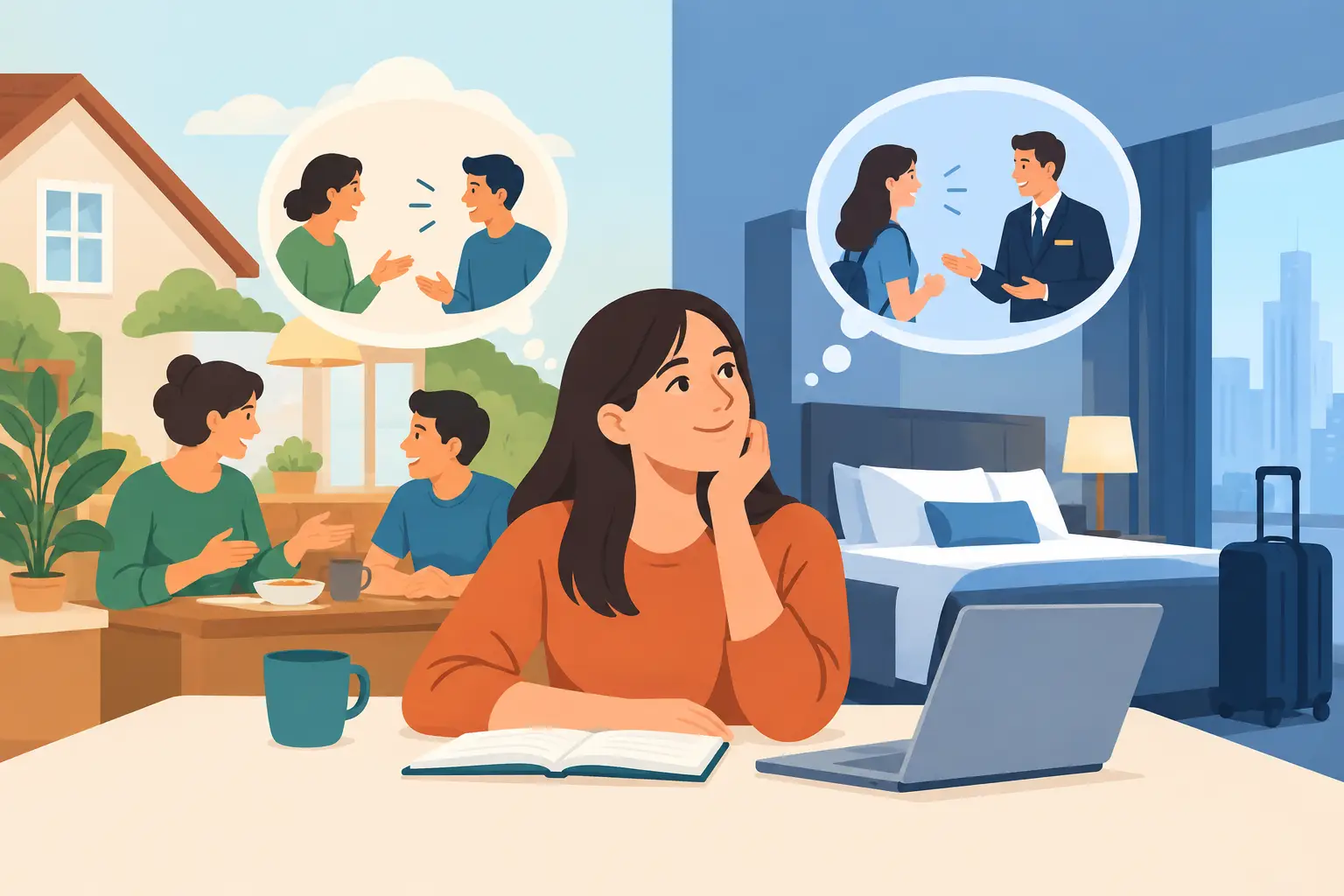
Then she used it. After a local outing, she returned to her homestay with stories to tell. At dinner, she could explain where she went, what surprised her, and what she hoped to do next. Her sentences were not always polished, but they were her own.
This is where immersion creates a useful cycle. Class gives learners language and correction. Life gives that language meaning. The next class provides an opportunity to notice what was difficult and practice it again.
Maya also began to recognize the difference between being understood and being perfect. When she used the wrong verb ending, her host mother often understood from context and gently modeled the natural phrasing in reply. Instead of feeling embarrassed, Maya started hearing corrections as part of a caring conversation.
Week Three: Taking Small Social Risks
By week three, Maya had enough familiar language to take more initiative. She began greeting neighbors before they greeted her. She asked follow-up questions rather than ending exchanges with “sí” or “no.” During cultural activities, she volunteered an opinion even when she had to search for a word.
Her confidence did not rise in a straight line. One afternoon, a fast conversation left her discouraged. She understood only fragments and felt as though she had made no progress at all. The next morning, her instructor reminded her to compare herself with where she began, not with a native speaker.
Together, they looked at a simple recording Maya had made during her first week. In it, she paused after nearly every phrase and relied heavily on English. A new recording revealed longer answers, more natural pacing, and a willingness to ask for clarification in Spanish. The progress was clear, even though there was still much to learn.
Week Four: Spanish as Relationship
During her final week, Maya spent less energy rehearsing every sentence. She still made mistakes, but she recovered more easily. At meals, she could follow familiar conversations without asking for constant translation. She shared stories from home, asked her host family about their traditions, and understood enough humor to laugh at the right moment.
Her biggest change was relational. Spanish had become connected to real people rather than performance. She was not simply practicing language; she was participating in a household and a community that welcomed her effort.
That sense of belonging is one reason CISA centers learning around both instruction and everyday cultural engagement. A supportive teacher can explain a grammar point. A host family can help a learner experience why that grammar point matters when telling a story, expressing gratitude, or building trust across cultures.
What Made the Difference?
Maya’s progress was not the result of one teaching method or a single adventurous outing. It came from several parts of immersion working together. Personalized instruction met her where she was. Daily conversations gave her a reason to use new language. Her homestay offered repeated, low-pressure practice with people who knew her. Cultural experiences gave her shared memories and questions worth discussing.
Her attitude also mattered. Maya did not wait until she felt ready to speak. She spoke while she was still uncertain. She asked people to repeat themselves. She accepted correction without treating it as failure. That willingness is not always easy, especially for high-achieving adults who are used to communicating precisely. Yet it is often the bridge between studying Spanish and living it.
For some learners, a week provides a motivating launch and a clearer sense of what to practice next. Others need several months to build the ease required for family conversations, professional settings, or long-term travel. A child, teen, retired adult, and busy professional may each progress differently. The right timeline depends on the goal.
Progress That Continues After Costa Rica
When Maya returned home, she was not finished learning Spanish. She was, however, equipped to continue. She scheduled regular conversations with coworkers, kept a short journal in Spanish, listened to familiar Spanish-language content, and stayed in touch with the people she met in Costa Rica.
Most importantly, she had a new response to the feeling of not knowing. Instead of withdrawing, she could say, “Can you help me understand?” That is a language skill, but it is also a posture of humility, courage, and connection.
The most meaningful measure of progress may not be the number of verb tenses a learner can name. It may be the moment they realize that another person is waiting patiently to hear what they have to say – and they choose to say it in Spanish.

Leave a Reply