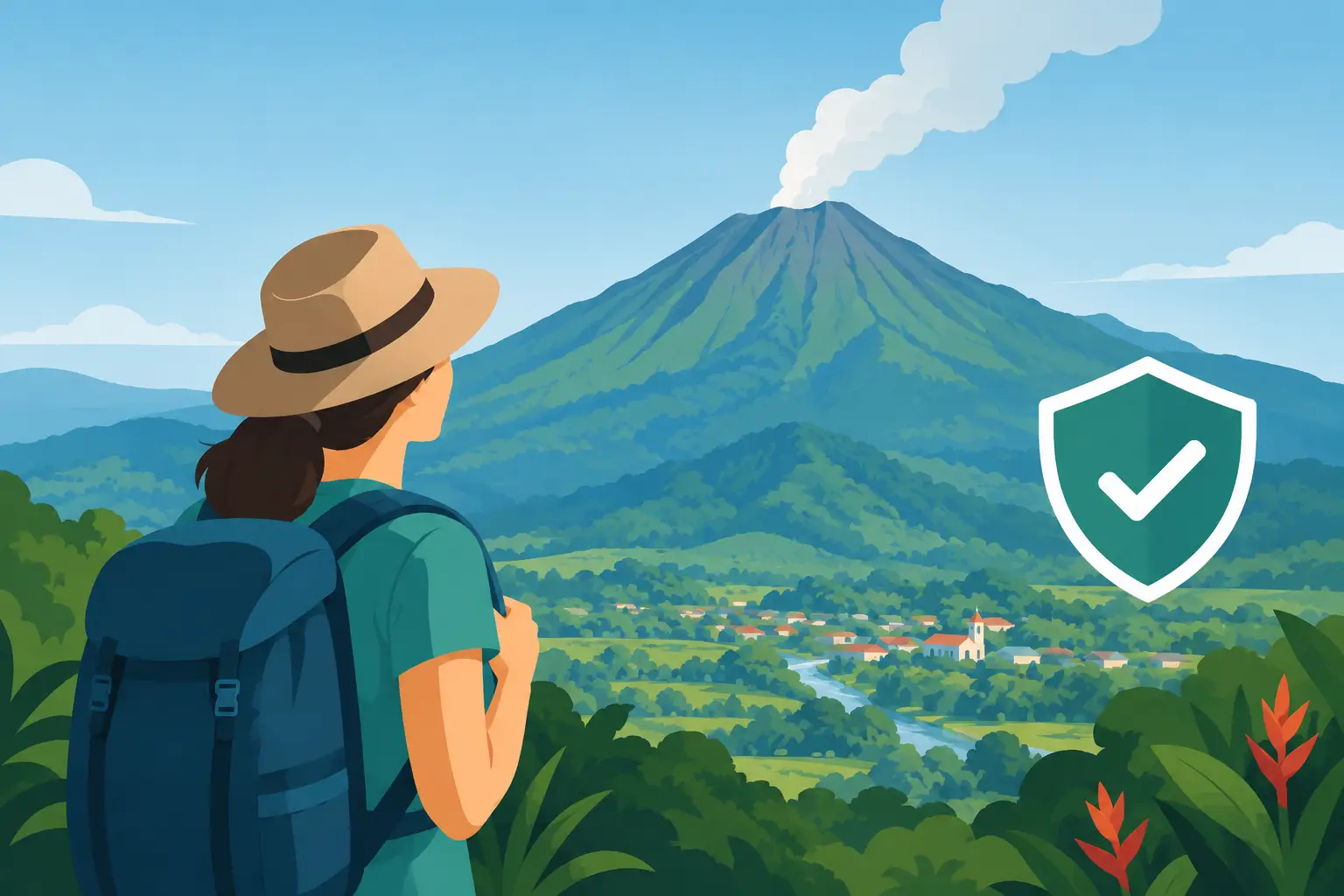
Turrialba travel safety is less about feeling on guard every minute and more about traveling with the steady awareness that helps you relax. This green, mountain-ringed region is known for warm hospitality, coffee farms, rivers, and meaningful everyday encounters. With sensible preparation, families, students, solo travelers, and groups can spend their energy practicing Spanish, sharing meals, and getting to know Costa Rica with confidence.
Turrialba is a smaller, more community-centered destination than the country’s busiest beach towns and city centers. That can feel wonderfully personal, especially during a homestay or an immersion program. It also means that local knowledge matters. Ask questions, pay attention to weather and road conditions, and let experienced hosts or program staff help you make wise plans for each day.
What Turrialba Feels Like on the Ground
Turrialba sits in Costa Rica’s lush Central Valley region, where rural roads, changing elevations, and tropical weather shape daily life. The pace is often calmer than in San José, but “calmer” should not be mistaken for risk-free. Travelers should use the same practical habits they would use in any unfamiliar place: keep valuables secure, stay aware of their surroundings, and avoid walking alone in isolated areas after dark.
Most visitors spend their time in town, with host families, at schools, on organized outings, or in nearby communities. These settings offer a strong foundation for a comfortable stay because there are people nearby who know the area. If you are studying with CISA, your hosts and program team can be a helpful source of current, practical guidance on transportation, neighborhoods, weather, and activity plans.
The best approach is neither fear nor carelessness. It is respectful attentiveness. Learn the route before you leave, carry what you need for the day, and let someone know if your plans change.
Everyday Turrialba Travel Safety Habits
A few small choices prevent many common travel problems. Carry only the cash and cards you expect to use that day, and keep your passport stored securely at your accommodation unless you have a specific reason to bring it. A photo or secure digital copy of your passport can be useful, but it does not replace the original when official identification is required.
Phones attract attention everywhere, particularly when they are used near roads or while waiting for transportation. Use yours purposefully, then put it away. Choose a crossbody bag or a daypack that closes securely, and avoid leaving bags, electronics, or luggage visible in a parked vehicle.
For families, establish a simple meeting point before entering a market, trailhead, or busy festival area. Children and teens often gain confidence quickly in a new setting, which is a gift, but they still need clear boundaries about where they can go and whom they should check in with. A local phone number, accommodation address, and trusted adult contact should be available to every member of the family or group.
Getting Around Safely
Transportation choices depend on your itinerary, group size, comfort with mountain driving, and the season. Daytime travel is generally easier, especially for visitors unfamiliar with Costa Rican roads. Rain, fog, potholes, narrow lanes, cyclists, and sudden turns can make a short distance take longer than expected.
If you rent a car, do not rely on travel times alone when scheduling airport transfers, tours, or class arrivals. Build in margin. Avoid driving unfamiliar rural routes at night when possible, and never leave belongings in the vehicle. If you use taxis or arranged drivers, ask your host, school, or hotel to recommend a trusted option rather than accepting an unverified ride.
Public buses can be an affordable and authentic way to travel, but they require extra attention to schedules, luggage, and personal belongings. They may be a good fit for experienced independent travelers traveling light. For younger students, first-time visitors, and groups with a full schedule, organized transportation is often the more restful choice.
Weather, Rivers, and Outdoor Adventure
The landscapes around Turrialba invite adventure, from rafting and hiking to farm visits and waterfall outings. They also deserve humility. Costa Rica’s rainy season can bring intense downpours, slippery paths, reduced visibility, and fast-changing river conditions. What looks like a gentle stream can become hazardous after rain.
Choose established operators for rafting, canyoning, horseback riding, and other guided activities. Confirm that guides provide appropriate safety equipment and explain expectations before the activity begins. Speak up if a helmet, life jacket, or harness does not fit correctly. A good guide welcomes questions and does not pressure guests to continue when conditions or comfort levels call for a change of plans.
Wear shoes with traction for trails, farms, and wet walkways. Pack a lightweight rain jacket, water, sun protection, insect repellent, and a dry bag for electronics. Hydration matters even on cloudy days, particularly for travelers arriving from cooler parts of the United States.
Do not swim in rivers or waterfalls unless a knowledgeable local guide or responsible host confirms that conditions are appropriate. Avoid trails after dark, stay with your group, and respect closures. A detour may be disappointing, but it is never a failure. Sometimes the wisest travel story is the one where everyone comes home safely.
Volcano Awareness Without Alarm
Turrialba Volcano is part of the region’s identity, and volcano conditions can change. Visitors should not make decisions based on old social media posts, distant rumors, or a previous traveler’s experience. Before visiting viewpoints, trails, or surrounding areas, check current official advisories through local hosts, park authorities, or trusted program staff.
Follow any access restrictions, air-quality guidance, or evacuation instructions immediately. People with asthma or respiratory concerns should discuss travel considerations with a medical professional before departure and carry prescribed medications in their original containers. Even when there is no active concern, it is wise to keep a small supply of essential medications with you rather than placing them in checked luggage.
This is a good example of why flexibility belongs in a Costa Rica itinerary. A changed route can become an unexpected afternoon at a coffee farm, a Spanish conversation with a host family, or a visit to a nearby cultural site.
Health, Food, and Personal Well-Being
Costa Rica has quality medical care, but travel insurance with medical coverage and emergency assistance can bring welcome peace of mind. Review your coverage before leaving home, including what it says about outdoor activities, pre-existing conditions, and medical transport. Keep emergency contacts, insurance details, and any relevant health information accessible to a travel leader or trusted companion.
Drink water from reliable sources and ask your host family or accommodation what they recommend locally. Enjoy fresh food, but use ordinary judgment with street food and meals that have been sitting in heat. Wash hands often, especially before eating and after outdoor activities.
Mosquitoes are part of tropical travel. Repellent, long sleeves in the evening when practical, and closed windows or screens where available can reduce bites. If you develop a fever, severe stomach illness, breathing difficulty, or symptoms that concern you, tell a host, group leader, or staff member promptly. Waiting to “push through” can make a manageable issue harder to handle.
Personal well-being also includes rest. Immersion is exciting, and it can be emotionally full. Between new vocabulary, unfamiliar foods, group activities, and the effort of communicating in Spanish, travelers may need quiet time. Families and group leaders can protect the experience by leaving room in the schedule for sleep, meals, and unhurried moments.
Respect Builds Safer Connections
One of the strongest forms of Turrialba travel safety is relational. Greet people warmly, ask before taking photos, dress appropriately for the setting, and listen when hosts explain local customs. These habits communicate respect, but they also help travelers become part of a caring network rather than remaining isolated visitors.
Practice useful Spanish before you arrive: how to ask for help, describe where you are staying, say that you need a pharmacy, and explain a food allergy. You do not need perfect grammar to communicate a real need. Courageous, respectful conversation is one of the most practical tools you can carry.
Travel in Turrialba can stretch your confidence in the best way. Bring your caution, bring your curiosity, and leave enough room in the day to accept the guidance of the people who call this beautiful place home.




Leave a Reply