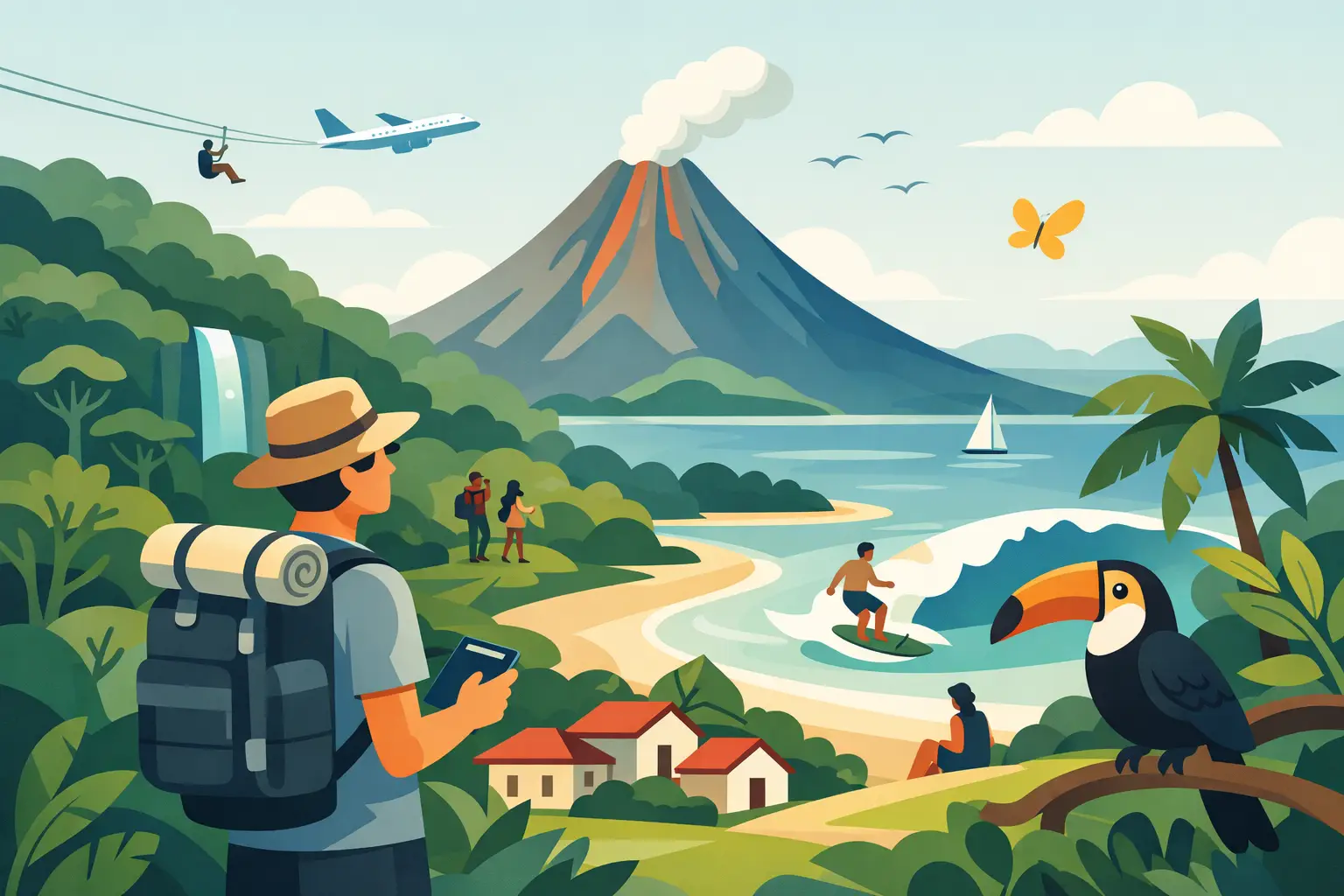
A gap year can easily become a collection of airport photos and short-lived memories. Or it can become a season when a young adult learns to communicate across cultures, serve with humility, and return home more confident than when they left. When families search for gap year spanish programs costa rica, they are often looking for more than language classes. They are looking for a place where growth feels supported, purposeful, and real.
Costa Rica is especially well suited to that kind of experience. Its welcoming culture, remarkable natural settings, and everyday opportunities to use Spanish give students room to learn at a human pace. The best program is not simply the one with the most activities. It is the one that connects instruction, relationships, safety, independence, and a student’s personal goals.
What a Gap Year Spanish Program Should Include
A meaningful gap year program should make Spanish part of daily life, not something reserved for a classroom workbook. Structured lessons matter because they give students a clear foundation in grammar, vocabulary, listening, and pronunciation. But progress becomes much more personal when students use those skills at breakfast with a host family, while buying fruit at a local market, or during a conversation with a neighbor.
Look for a program that balances guidance with growing independence. Recent graduates may be ready to travel but still benefit from a dependable routine, caring staff, and clear expectations. Adults taking a career break may want more flexibility and a stronger focus on professional communication. A thoughtful program can meet both needs without treating every learner the same.
A strong gap year experience also provides a sense of progression. A beginner needs a different first month than someone who already understands conversational Spanish. At CISA, students can begin with Spanish Launch, move into Spanish Venture, build confidence through Fearless Conversation, and work toward Boundless Fluency over a longer stay. The names are less important than the idea behind them: language growth is a journey, and students should know what they are building toward.
Why Costa Rica Works for Immersion
Costa Rica offers a practical first step into Latin America for many US students and families. Spanish is heard everywhere, yet the country is known for hospitality and a relaxed, relationship-centered way of life. Students can practice without feeling that every imperfect sentence is a test.
Turrialba offers a different rhythm from a large capital city or crowded beach destination. Surrounded by green mountains, farms, rivers, and close-knit communities, it gives students a chance to slow down and notice daily life. That setting can be especially valuable during a gap year, when the goal is often to gain perspective rather than rush from one attraction to the next.
Costa Rica is not a single experience, however. A student who wants nightlife and constant city energy may find a smaller community quieter than expected. Someone who values nature, family connection, local culture, and focused study may find that same setting deeply refreshing. The right location depends on what the student hopes this season will become.
Language Learning Happens Between Classes
The most memorable Spanish lessons are often unplanned. A host parent may explain a family recipe. A taxi driver may recommend a local soccer match. A student may need to ask for help, clarify directions, or share something personal with a new friend. Those small moments ask learners to stop translating every word and begin communicating.
Homestays are particularly powerful because they create gentle, consistent practice. Students hear how people actually speak, including expressions that rarely appear in a textbook. They also learn the rhythms of another household: greeting people warmly, helping with meals, respecting shared spaces, and showing gratitude. For many students, their host family becomes one of the most meaningful parts of their time abroad.
Still, homestays are not identical for everyone. Some students thrive in a busy household with children, pets, and frequent conversation. Others need a quieter space or have dietary, accessibility, or health considerations. Families should ask how housing is matched, what support is available, and how concerns are handled. Good immersion programs welcome those questions because care is part of the learning environment.
Choosing the Right Length for Your Goals
A gap year does not have to mean leaving home for twelve months. A student might spend four weeks building a foundation before starting college, three months preparing for a service-oriented path, or six months combining language study with cultural activities and meaningful community engagement.
For beginners, a longer stay usually creates more room for confidence to develop. The first weeks can feel exciting and tiring at the same time. Students are learning the routines of a new place along with the language itself. By the second or third month, many begin to respond more naturally, understand more of what they hear, and take greater initiative in conversations.
Shorter programs can still be valuable, especially when they have a clear purpose. A two- or three-week experience may help a student decide whether a longer immersion program is right for them. It may also be the right fit for a family seeking an educational break together. The key is honest expectations: a short stay can spark momentum, while sustained fluency requires sustained contact with Spanish.
Questions Families Should Ask Before Enrolling
Before choosing among gap year Spanish programs in Costa Rica, families should ask how much Spanish instruction students receive and whether classes are adapted to their level. They should also understand the daily schedule. Is there time to rest, study, explore, and connect, or is every hour planned?
Safety deserves direct, practical questions as well. Ask about airport coordination, housing supervision, transportation, emergency procedures, staff availability, and communication with parents when appropriate. A program does not need to remove every challenge from international travel. In fact, learning to handle manageable challenges is part of growing up. But students should never have to navigate serious concerns alone.
It is also wise to ask how cultural activities and service opportunities are approached. Service should not be treated as a quick photo opportunity or a way for visitors to feel heroic. The most respectful programs listen to local partners, respond to real community priorities, and help students understand that service begins with relationships and respect.
A Gap Year With Room for Purpose
For some students, faith is an important part of why they want to spend time abroad. For others, the draw is language, culture, adventure, or a desire to contribute. A welcoming program can honor all of those motivations while creating a community shaped by love, respect, hospitality, and care for others.
This matters because a gap year often brings big questions. What kind of work do I want to do? How do I relate to people whose lives differ from mine? What does it mean to be responsible with freedom? Spanish immersion cannot answer every question, but it can give students new experiences from which to ask better ones.
Adventure has a place here, too. Exploring waterfalls, hiking in the mountains, visiting farms, or learning about Costa Rican traditions can make a stay joyful and memorable. Yet adventure is most valuable when it sits alongside ordinary life: showing up for class, greeting a host family, trying again after a misunderstood phrase, and becoming known in a community.
The right program will not promise that a student returns home fluent, fearless, or completely certain about the future. It can offer something more honest: a supported place to practice, stretch, listen, serve, and grow. That is often enough to turn a gap year into a lasting beginning.



Leave a Reply